

Polyendocrine Metabolic Ovarian Syndrome (PMOS) is one of the most common, but treatable causes of infertility in women. PMOS occurs in up to 10 percent of reproductive age women and affects the endocrine system- the part of the body responsible for producing and balancing hormones. In women with PMOS, the hormonal imbalance interferes with the growth and release of eggs from the ovaries (ovulation). If you don't ovulate, you can't get pregnant. Some symptoms of PMOS may include:
- excess facial or body hair and acne
- obesity
- lack of menstrual periods
- hair thinning
- ovarian cysts
The physical symptoms of PMOS are highly variable and ethnicity affects the presence/absence of symptoms 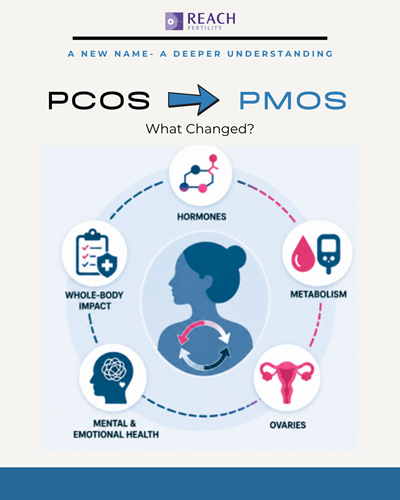 PCOS is now PMOS (Polyendocrine Metabolic Ovarian Syndrome) to better reflect what the condition truly is—a complex hormonal and metabolic disorder, not simply a condition involving "ovarian cysts." While the name is changing, the condition, diagnostic criteria, and treatment options remain the same. The new terminology aims to improve understanding, reduce misconceptions, and recognize the whole-body impact of the syndrome.