


When researching fertility clinics, you’ve likely come across the term “SART success rates.” Understanding what SART is and how to interpret fertility clinic statistics can help you make informed decisions about your care and feel more confident throughout your fertility journey.
At Reach, we believe transparency matters. That’s why we openly share our success rates and participate in industry reporting standards that help patients better understand IVF outcomes.
What Is SART?
The Society for Assisted Reproductive Technology (SART) is the leading organization for fertility clinics and IVF providers in the United States. SART collects, verifies, and publishes fertility treatment outcome data from member clinics nationwide. Its goal is to provide transparency, improve standards of care, and help patients compare fertility clinics using consistent reporting methods.
SART reports typically include:
- IVF cycle outcomes
- Live birth rates
- Pregnancy rates
- Success rates by age group
- Frozen embryo transfer outcomes
- Donor egg statistics
Because fertility outcomes are influenced by many factors, especially age and medical history, SART data is organized carefully to give patients a more complete picture of expected outcomes.
Why SART Success Rates Matter
Success rates can be an important tool when choosing a fertility clinic, but they should always be interpreted in context.
SART itself notes that comparing clinics isn’t always straightforward because patient populations and treatment approaches vary significantly between practices. Some clinics may treat only patients with favorable prognoses, while others, like Reach, welcome complex and challenging fertility cases.
That’s why it’s important to look beyond a single percentage and consider factors such as:
- Personalized treatment plans
- Physician expertise
- Laboratory quality
- Technology and research involvement
- Patient experience and support
- Willingness to treat difficult cases
At Reach, we believe every patient deserves an individualized approach and every opportunity to grow their family.
Understanding the Difference Between Pregnancy Rates and Live Birth Rates
When reviewing fertility statistics, you may notice different types of reported outcomes.
- Pregnancy Rate: This refers to cycles that result in a positive pregnancy test or confirmed pregnancy on ultrasound.
- Ongoing Pregnancy Rate: An ongoing pregnancy means the pregnancy is progressing successfully and the patient has “graduated” from fertility care to their OB/GYN. This is often considered a more meaningful measure than an initial positive test.
- Live Birth Rate: This refers to cycles resulting in the delivery of a baby and is one of the most important benchmarks reported through SART.
Because miscarriage risk increases with age and other medical factors, ongoing pregnancy and live birth rates often provide the clearest picture of IVF success.
Reach's Current Success Rates
At Reach Fertility, we are proud of the outcomes we achieve while continuing to care for patients with a wide range of fertility challenges. According to our current clinical data: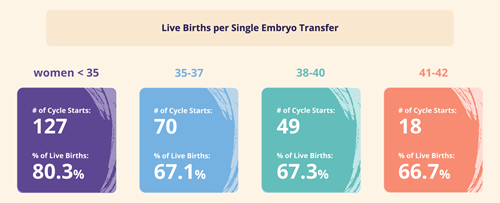
We believe these numbers reflect our commitment to:
- Personalized fertility care
- Advanced reproductive technology
- State-of-the-art embryology labs
- Evidence-based treatment strategies
- Ongoing clinical research and innovation
Importantly, Reach also emphasizes that success means more than statistics alone. Our goal is the same as yours: helping you bring home a healthy baby.
Why Fertility Success Rates Shouldn’t Be the Only Factor
While SART reporting is valuable, fertility care is deeply personal. A clinic with slightly higher published numbers may not necessarily be the best fit for your specific situation.
Your fertility journey may depend on factors such as:
- Age
- Egg quality
- Male factor infertility
- Endometriosis
- PCOS
- Previous IVF history
- Genetic considerations
- Uterine health
That’s why individualized care matters so much. At Reach, our team works closely with every patient to develop customized treatment plans designed around their unique goals, diagnosis, and medical history.
Learn More About Reach Fertility Success Rates
If you’re exploring fertility treatment options, understanding SART reporting and clinic success rates is an important first step. You can learn more about Reach’s outcomes and approach to patient care here: Reach Fertility Success Rates
Or contact our team to schedule a consultation and discuss your fertility goals with one of our specialists.